Dave Stephens: Caregiver, Advocate, Patient & Survivor
Dave Stephens: Caregiver, Advocate, Patient & Survivor
Full Episode Summary
For years, Dave Stephens knew Alzheimer’s from the caregiver’s side. He watched his father live with the disease, helped his family navigate the realities of caregiving, and eventually became deeply involved in Alzheimer’s advocacy—including serving as President of the Alzheimer’s Association and pushing for greater awareness, research, and funding.
Then Alzheimer’s became personal in an entirely different way.
In this episode of Aging Unfiltered: Real. Raw. Law., Edna Colucci and Ashli Carroll sit down with Dave to discuss his own Alzheimer’s diagnosis in 2024, the subtle changes that convinced him something was wrong, the testing that followed, and his decision to pursue an FDA-approved treatment.
Dave shares how his experience caring for his father made him unwilling to dismiss persistent cognitive changes as simply getting older. He began tracking his mistakes, sought additional evaluation, and ultimately learned that Alzheimer’s biomarkers were present.
His story also illustrates just how quickly the Alzheimer’s landscape is changing. The treatment options available to Dave were dramatically different from those available to his father. After undergoing anti-amyloid treatment and careful medical monitoring, Dave says follow-up imaging showed complete clearance of the amyloid plaque in his brain.
That result did not erase his diagnosis, but it radically changed the conversation around what living with Alzheimer’s can look like.
Dave now uses his experience to encourage others to seek answers earlier, learn about available treatments and clinical trials, support Alzheimer’s research, and reject the outdated belief that an Alzheimer’s diagnosis automatically means there is nothing left to do.
Full transcript
Lightly edited for website readability. Repeated words, filler language and overlapping conversation have been cleaned up while preserving the substance of the episode. This is a publication transcript, not a court-reporter-style verbatim record.
Aging Unfiltered — Episode 4
Ashli: Welcome back to Aging Unfiltered. I’m Ashli.
Edna: And I’m Edna.
Ashli: This is where we have real, raw conversations about aging, families and the situations people are actually navigating.
Before we get started, Aging Unfiltered is presented by Hook Law for general informational and educational purposes only. Nothing in this podcast is legal, tax, financial or medical advice, and listening does not create an attorney-client relationship with Hook Law or any of its attorneys.
Every situation is different. Before acting on anything you hear, please consult with the appropriate qualified professional.
Edna: One of the things we want to do with this podcast is remind people that behind every diagnosis, every statistic and every medical breakthrough, there is a person.
There is a family.
There is a story.
And those stories are so much of what we see in the work we do.
Ashli: That’s why I’m especially excited about today’s guest, because his story gives us a perspective we don’t hear very often.
Edna: Absolutely.
Today we have Dave Stephens with us.
Dave is a nationally recognized Alzheimer’s advocate, and his journey really spans the entire spectrum.
He has been a caregiver.
He has been an advocate and a leader.
And now he has experienced an Alzheimer’s diagnosis himself.
Dave, thank you so much for being here.
Dave: Thank you. I’m glad to be here.
Caring for His Father
Ashli: Before we talk about your own diagnosis, I want to start with your dad, because that was really your introduction to Alzheimer’s.
What did that experience look like for you?
Dave: My father had Alzheimer’s, and it became a long journey for our family.
Like so many families, we didn’t necessarily understand what we were getting into at the beginning.
You start noticing changes.
You notice things in someone’s behavior or memory that aren’t what you’re used to seeing.
Then you begin trying to figure out what is happening and what you’re supposed to do about it.
And it doesn’t affect only the person with the diagnosis.
It affects everybody.
Edna/Ashli: That’s something we see constantly.
One person gets the diagnosis, but suddenly the entire family is dealing with appointments, care, finances, transportation, legal issues and all of these other pieces.
Dave: Exactly.
There’s the medical side, but there’s also everything around it.
Who is going to the doctor’s appointments?
Who’s keeping track of things?
What happens with insurance?
What happens financially?
What happens with the things that person used to take care of themselves?
You start having to organize all of that.
It becomes part of your life.
Ashli: How long did that journey last with your father?
Dave: It was about nine years.
And over those years I learned a tremendous amount.
I also met some wonderful people who were involved in the Alzheimer’s community.
That eventually led me into advocacy.
Becoming an Alzheimer’s Advocate
Dave: I became more involved with the Alzheimer’s Association.
Over time, I ended up serving in a leadership role and as President of the Alzheimer’s Association.
I participated in walks and fundraising.
I went to Washington.
I talked about awareness.
I talked about funding.
The more I learned, the more I realized how much needed to change.
We needed more research.
We needed more funding.
We needed people to understand how enormous this disease was becoming.
Edna: So while you were caregiving, you also became an advocate.
Dave: Right.
Because when you’re watching somebody you love go through it, you start asking, “What are we doing about this?”
And at that time, there really weren’t many options.
There were a couple of medications, but there was very little available that could actually change what was happening with the disease.
A lot of caregiving was simply being there.
Supporting them.
Watching what was happening.
Trying to make them comfortable.
And hoping research eventually gave families something more.
When Dave Began Noticing Changes in Himself
Ashli: Then after your father passed away, your relationship with Alzheimer’s changed again.
When did you first begin thinking something might be happening with you?
Dave: It was probably two or three years ago when I started noticing that I wasn’t performing the way I was accustomed to performing.
There were things that normally came easily to me that weren’t as easy.
At first you ask yourself whether you’re imagining it.
Everybody forgets things.
Everybody walks into a room and wonders why they’re there.
That’s normal.
But this felt persistent.
Dave: I actually asked my assistant to start keeping track of things I was missing.
I wanted another person’s perspective.
I wanted to know whether I was really seeing a pattern or whether I was making too much of ordinary mistakes.
And there were things showing up.
Then I started doing testing.
Some of the cognitive work was more challenging for me than I thought it should have been.
That got my attention.
Edna: Given what you had already experienced with your father, I imagine you were probably more aware of those signs than most people would be.
Dave: Absolutely.
My experience with my father made a huge difference.
Someone else might say, “I’m getting older. Everybody forgets things.”
But I’d seen Alzheimer’s.
I knew enough about it to know that if I was seeing something different, I wanted to find out more.
I didn’t want to ignore it.
Pursuing an Alzheimer’s Diagnosis
Ashli: So you started pursuing additional testing?
Dave: Yes.
One test led to another.
Eventually the testing showed enough concern that we continued looking.
And ultimately we found biomarkers that were consistent with Alzheimer’s disease.
That’s when it becomes very real.
You can suspect something.
You can wonder about it.
But there is a very different feeling when you’re sitting there and being told the testing supports an Alzheimer’s diagnosis.
Edna: Especially after having already watched your father experience it.
Dave: Exactly.
You know where your mind goes.
You remember what you saw.
You remember what options weren’t available.
So even though I had spent years around Alzheimer’s, I still had to process hearing it about myself.
Choosing Treatment
Ashli: Once you knew, you then had a decision to make about treatment.
Dave: Yes.
And that was another big step.
The difference between my situation and my father’s situation was that there were now treatment options that did not exist for him.
I had spent years following the research.
I knew new drugs had been studied.
I knew things were beginning to change.
So when I qualified for treatment, I wanted to seriously consider it.
Dave: It wasn’t a decision I made in a vacuum.
My wife was involved.
My family was involved.
Friends were supportive.
Your support system matters.
Because even when you’re someone who has spent years talking about Alzheimer’s, it is different when you’re the patient.
Edna: How long did the testing and qualification process take?
Dave: It felt long.
There is a lot involved.
There are cognitive tests.
There is medical history.
There is imaging and biomarker testing.
There are questions about whether you’re an appropriate candidate.
And then there’s insurance and all of the practical side of actually accessing treatment.
It isn’t necessarily a situation where you go to a doctor one day and start treatment the next.
Adjusting to Memory Changes
Ashli: While all of this was happening, were there practical things you started doing differently?
Dave: Yes.
Nothing revolutionary.
I just started being much more intentional.
I use my calendar.
I make notes.
If somebody calls me and there is something I know I’m going to need later, I write it down.
Sometimes I’ll record something on my phone.
Those things help.
You learn to build systems around yourself.
Dave: Again, everybody forgets things.
The important part for me was that this wasn’t one isolated moment.
It was a pattern.
And because I knew my family history, I wasn’t comfortable pretending it wasn’t there.
Why People Avoid Testing
Edna: One thing we hear from families is, “I don’t want to know.”
And historically you can understand why someone might feel that way.
If there isn’t anything that can be done, why would I want the diagnosis?
Dave: That’s a huge issue.
There is fear.
There is stigma.
People don’t necessarily want to say the word Alzheimer’s.
They don’t want somebody looking at them differently.
For a long time, there was also the reality that the options were extremely limited.
So people thought, “What is knowing going to do for me?”
Dave: But that is changing.
And that’s one of the biggest messages I want people to understand.
What was true when my father was diagnosed is not necessarily true today.
What was true even three years ago is not necessarily true today.
Research is moving.
Treatments are changing.
Testing is changing.
That doesn’t mean every person qualifies for every treatment.
It doesn’t mean there’s a cure.
But it does mean there may be something worth asking about.
A New Treatment Landscape
Ashli: You had already been following the research before your own diagnosis.
Dave: Yes.
I had spent enough time in Alzheimer’s advocacy that I knew what was happening.
I knew some of the newer treatments had shown an ability to slow progression in appropriate patients.
When you’re dealing with Alzheimer’s, even slowing the disease is meaningful.
More time at a higher level of function matters.
Six months matters.
A year matters.
Anything that gives somebody more meaningful time with their family matters.
The Infusion Process
Edna: What was treatment actually like?
Dave: Mine involved infusions.
There is a process that goes with that.
Your medical team is watching you very closely, particularly early in treatment.
There are known risks associated with these medications, including things like swelling or bleeding in the brain.
Those aren’t small things.
That’s why there are screening requirements and ongoing monitoring.
Dave: I knew the risks going in.
For me personally, I didn’t experience the complications they were monitoring for.
I was fortunate.
But that’s my experience.
Someone else has to have that conversation with their own doctors and look at their own medical situation.
Ashli: So there were ongoing scans and follow-up?
Dave: Yes.
They monitor you.
They want to know what’s happening.
They want to make sure you’re tolerating treatment safely.
And eventually we reached the point where it was time to see what the treatment had actually done.
The Phone Call
Dave: Then I got the phone call.
And this is hard to explain emotionally.
When you’ve lived around this disease for as long as I have, you don’t necessarily go into treatment expecting some giant miracle.
You’re trying to stay healthy.
You’re trying to slow things down.
You’re trying to give yourself the best chance you can.
Then you get a call with the results.
Dave: The amyloid plaque they had been measuring was gone.
Completely cleared.
One hundred percent of the measurable plaque they were targeting was no longer there.
My wife was there with me.
It was one of those moments where you almost don’t know how to react because you’ve spent so many years associating Alzheimer’s with loss.
And suddenly you’re receiving genuinely encouraging news.
Edna: That must have been extraordinary after everything you’d experienced with your father.
Dave: It was.
And I want to be careful about how I say it.
I’m not saying Alzheimer’s doesn’t matter anymore.
I’m not saying everybody is going to have my result.
I’m not saying I’m magically finished with this disease.
But I am saying the conversation has changed.
There are things available now that were not available to my dad.
That’s enormous.
Follow-Up Memory Testing
Dave: They also continued doing cognitive and memory testing.
My doctor wanted to see where I was after treatment.
And those results were encouraging too.
There were categories where I performed better than I had previously.
That was exciting.
Again, I don’t take anything for granted.
But when you’ve been given this diagnosis, encouraging results matter.
From Grief Back to Advocacy
Ashli: Even with all of your experience, did you still go through the emotional stages that families describe after a diagnosis?
Dave: Absolutely.
You still ask, “Why me?”
You can get angry.
You grieve.
You know too much about what the disease can do.
But eventually I came back to advocacy.
That’s who I already was.
And now I had another perspective to bring to it.
Dave: Before, I could tell you what it was like to be a caregiver.
I could tell you what it was like to lose my father to this disease.
Now I can also tell you what it feels like to be the person hearing the diagnosis.
I can tell you what testing feels like.
I can tell you what treatment feels like.
And I can tell people there is more reason for hope than there used to be.
Staying Active
Edna: You’ve also continued to be extremely physically active.
Dave: Yes.
That’s always been important to me.
I try to stay in shape.
I try to do the things I can personally control.
I even took on a major physical challenge that became a Guinness World Record.
Part of that was about challenging myself, but it also became another opportunity to bring attention to Alzheimer’s.
If doing something gets people talking about the disease, then I’m going to use that opportunity.
Dave: The disease doesn’t get to define everything I do.
I’m still living.
I’m still active.
I’m still advocating.
I’m still looking for the next thing I can do.
Lifestyle and Research
Ashli: When people hear your story, they’re naturally going to ask, “What should I do?”
Dave: The most important thing is to understand that my story is my story.
I’m following the medical guidance I’ve been given.
I pay attention to the research.
I stay physically active.
I try to keep myself in the best condition I can.
But none of that means somebody should copy exactly what I do without talking to their own doctors.
Dave: What I do think people can do is become informed.
There is a lot happening right now.
There are treatments that didn’t exist before.
There are different forms of testing.
There are clinical trials.
Research is moving incredibly quickly.
Ask questions.
What Dave Would Tell Someone Newly Diagnosed
Edna: If someone listening today has just been diagnosed—or their spouse or parent has—what would you tell them?
Dave: First, don’t assume that what you know about Alzheimer’s from ten years ago is still the whole story.
Even what you heard three years ago may be outdated.
Go find out what is available now.
Talk to your doctor.
Ask about current FDA-approved treatments.
Ask whether you qualify for additional testing.
Ask whether a specialist would be appropriate.
Ask about clinical trials.
Dave: You can search for the most recent information, but ultimately you need to have the conversation with medical professionals who understand your situation.
If you’re concerned about your memory, start with the conversation.
Don’t simply decide that it’s aging and ignore it.
Better Access to Testing
Dave: We also need to keep improving access to testing.
That’s part of what I advocate for.
People need to know what the signs are.
Doctors need education about what to look for and what options are available.
We need systems that make it easier for people to get evaluated earlier.
If treatment is going to work best in earlier stages, then early identification becomes even more important.
Ashli: So early diagnosis matters differently now than it did when your father was diagnosed.
Dave: Exactly.
Before, early diagnosis could help you plan, which is still incredibly important.
But now there may also be treatment implications.
That’s a major change.
Clinical Trials and the Future
Edna: And research isn’t stopping with the medications available today.
Dave: Not even close.
There are other things in clinical trials.
There are other approaches being studied.
There are changes happening in testing.
There is work being done in several different areas.
We have to keep funding that research.
We have to keep participating in studies.
We have to keep pushing.
Dave: I’ve had opportunities to speak with researchers and doctors who are doing this work, and the excitement about where we are now compared with where we were only a few years ago is incredible.
That doesn’t mean the problem is solved.
But the direction matters.
Why Slowing Progression Matters
Ashli: Sometimes people hear that a treatment “slows progression” and think that doesn’t sound dramatic enough.
Dave: But think about what that time means.
If you can preserve somebody’s function for longer, that’s time with their spouse.
That’s time with their children.
That’s time living more independently.
That’s time making decisions for yourself.
That’s meaningful.
And as treatments improve, we’re hoping to gain even more of that time.
Dave: Research builds on research.
A treatment that gives us one result today may lead to something better tomorrow.
That’s why it’s so important not to give up.
Hope Without False Promises
Edna: What I appreciate about your story is that it is hopeful without pretending Alzheimer’s isn’t still incredibly serious.
Dave: It is serious.
I’ve lived it.
I’ve watched what it can do.
I don’t minimize that for a second.
But I also don’t want people living with an outdated idea that there is absolutely nothing they can do.
That isn’t where we are anymore.
Dave: My father did not have the options I had.
The next person may have options I didn’t have.
That’s the goal.
Support for Families
Ashli: We also want families listening to know they don’t have to navigate this alone.
There are professionals and organizations that can help.
There are people who understand caregiving.
There are legal professionals.
There are health care professionals.
There are Alzheimer’s organizations and support networks.
Isolation makes an already difficult situation even harder.
Dave: Absolutely.
Ask for help.
Talk to people.
Connect with the organizations doing this work.
There are resources out there.
Have the Conversations Early
Edna: And from our perspective, this is another reason to have these conversations early.
Don’t wait until there is a diagnosis or a crisis to start talking about who is going to help, what documents are in place, what matters to you and what you would want.
Ashli: Aging, dementia and health concerns affect the whole family.
The earlier you have those conversations, the more opportunity everyone has to participate.
Dave: That’s right.
Planning isn’t giving up.
Getting tested isn’t giving up.
Talking about Alzheimer’s isn’t giving up.
It’s preparing yourself and your family.
And today there is more reason than ever to stay informed.
Closing
Edna: Dave, thank you.
Your story is incredibly powerful because you’ve been on so many sides of this disease.
You’ve cared for someone you loved.
You’ve advocated for families.
You’ve received the diagnosis yourself.
And now you’re able to share what treatment and continued advocacy have meant to you.
Dave: Thank you for having me.
If my story can get one more person to ask a question, get evaluated or understand that there may be options, then it’s worth telling.
Ashli: And that’s exactly why we created Aging Unfiltered—real people sharing real stories that might help another family.
If you or someone you love is dealing with Alzheimer’s or dementia, there are organizations and professionals who can help you navigate what comes next.
You don’t have to do it alone.
Edna: And one of our biggest takeaways is to start early.
Have the conversations before there’s a crisis.
Ask questions.
Know what resources are available.
Include the people you love in those discussions.
Thank you for joining us for another episode of Aging Unfiltered.
Until next time.
Closing Disclaimer
Aging Unfiltered is presented by Hook Law for general informational and educational purposes only. Nothing in this podcast constitutes legal, tax, financial, medical or other professional advice, and listening does not create an attorney-client relationship with Hook Law or any of its attorneys.
Every person’s circumstances are different. Before acting on anything discussed in this podcast, consult with the appropriate qualified professional.
Related episodes
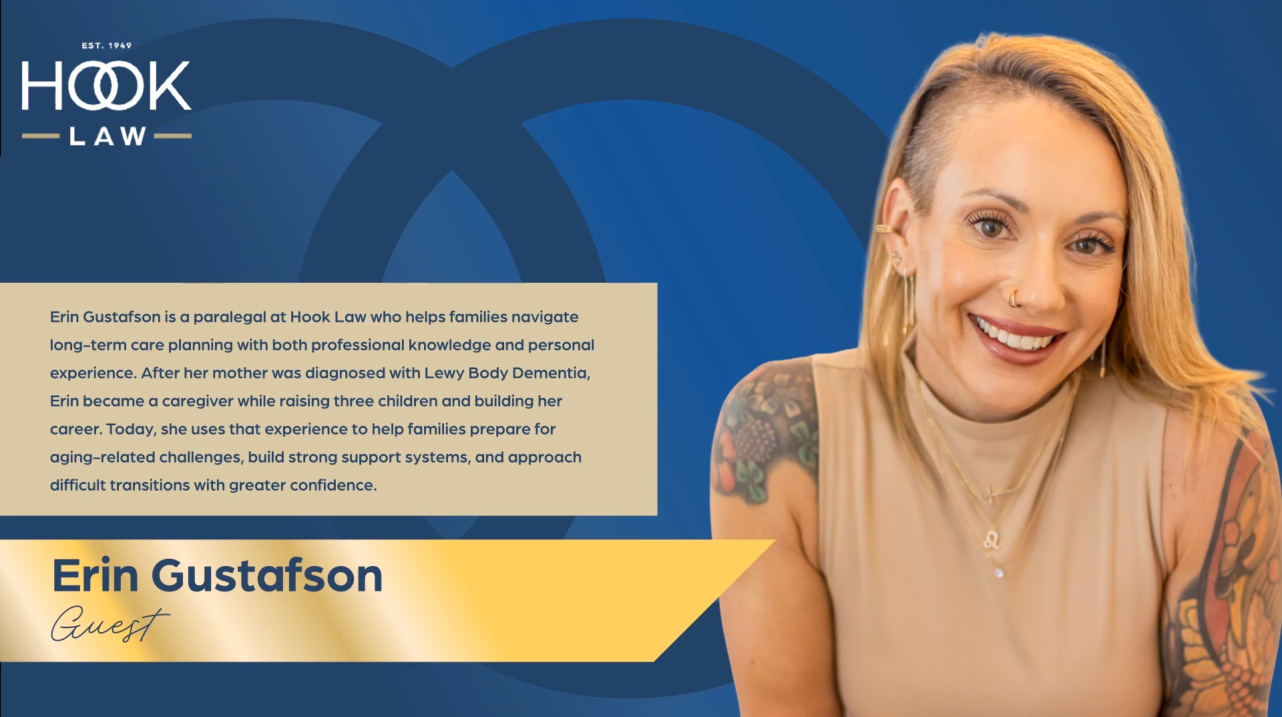
Erin Gustafson: From Daughter to Caregiver
What happens when the person who has always cared for you suddenly needs you to care for them? In this episode of Aging Unfilte...
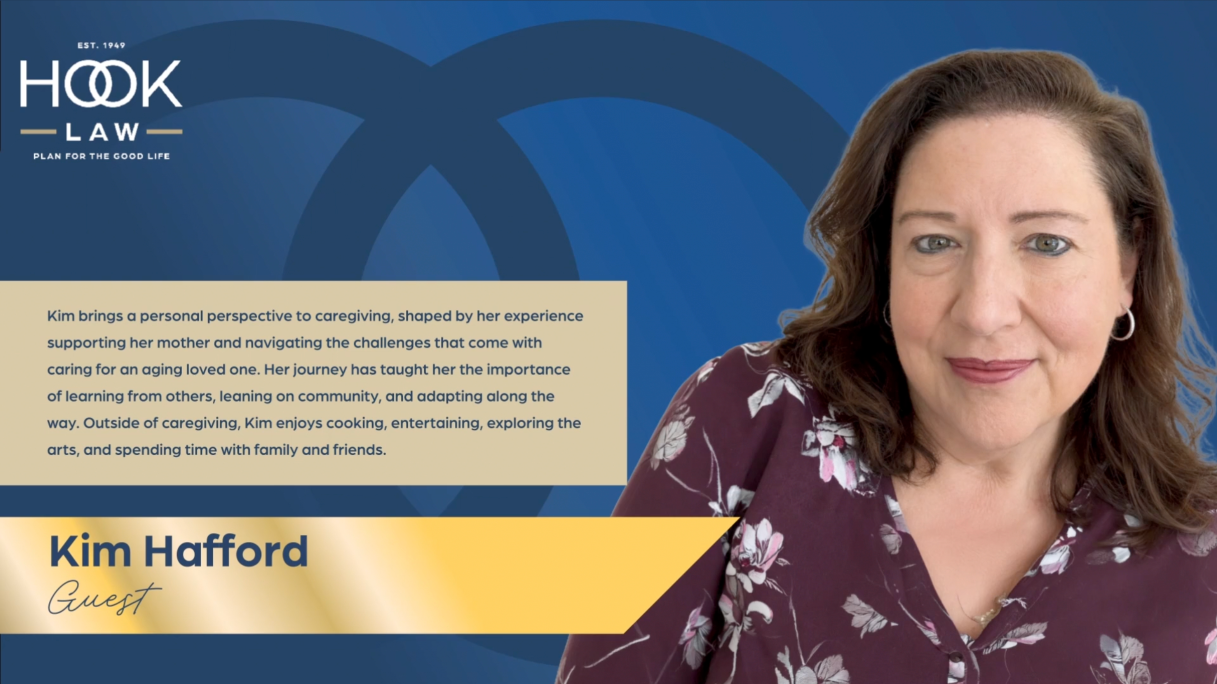
Kim Hafford: Navigating Dementia, Caregiving & the Decisions Families Don’t Expect
When a parent begins showing signs of dementia, families can quickly find themselves making decisions they never expected to fa...
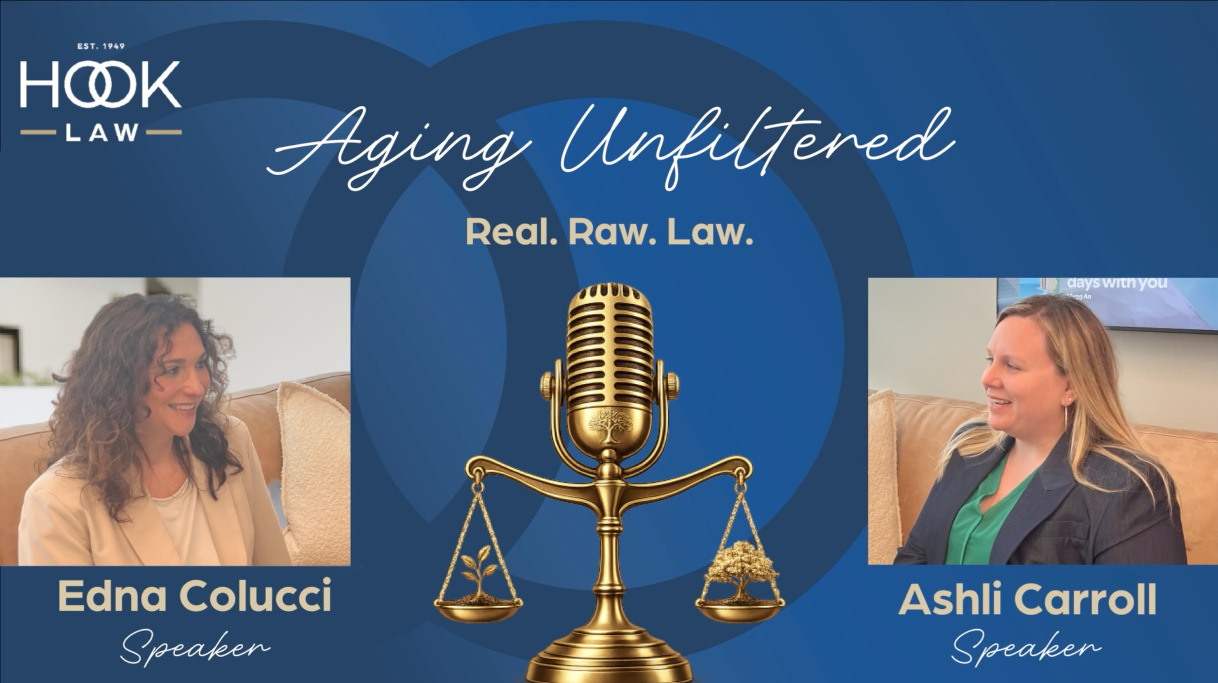
Aging Unfiltered: Real. Raw. Law.
In the first episode of Aging Unfiltered: Real. Raw. Law., Hook Law attorneys Edna Colucci and Ashli Carroll introduce the expe...